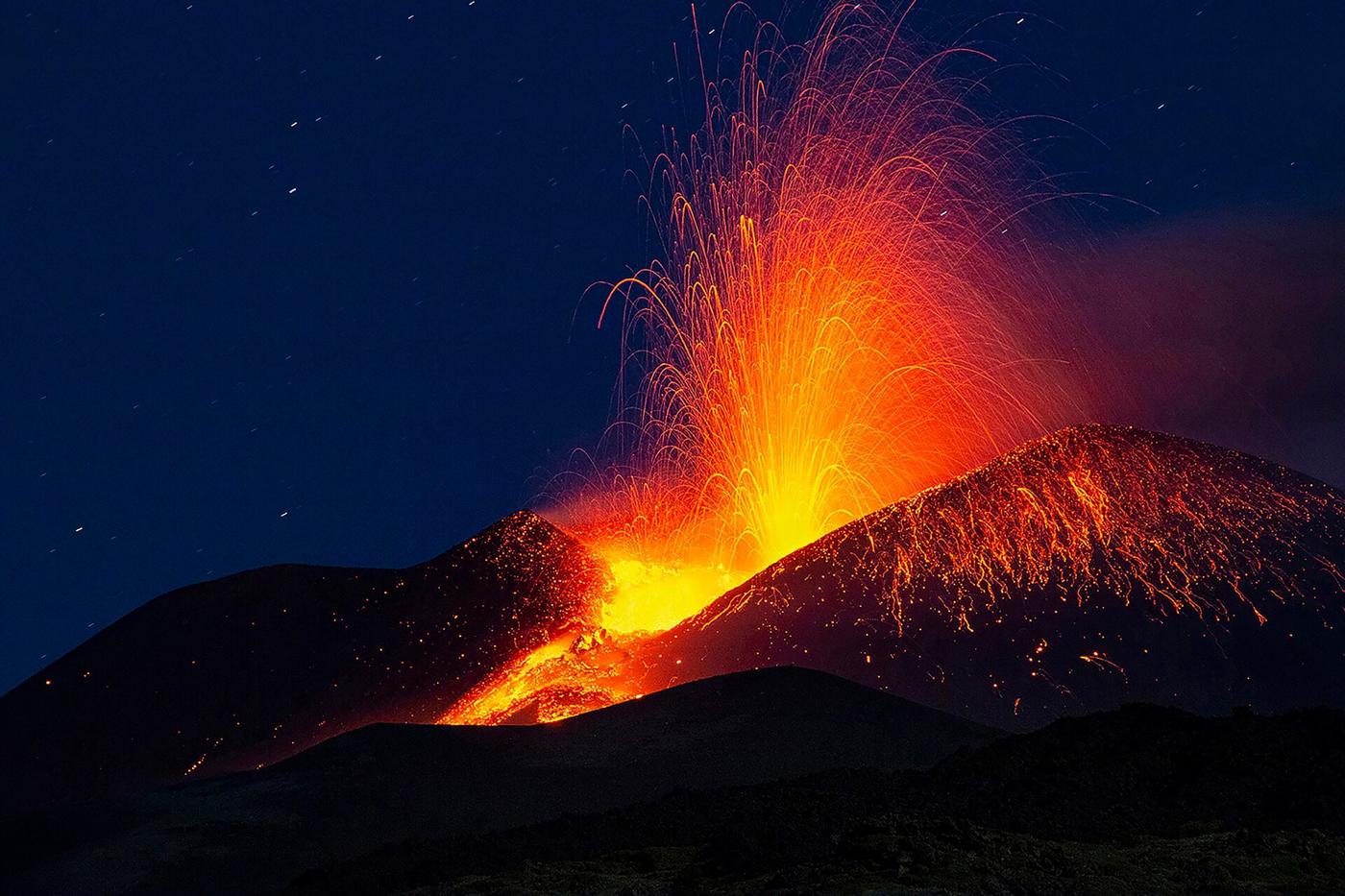
Mount Etna
Europe’s tallest active volcano: half a million years of eruptions, a myth for every crater, and snow beside fire. Sicilians simply call her «a Muntagna» — the Mountain.
Europe’s tallest active volcano: half a million years of eruptions, a myth for every crater, and snow beside fire. Sicilians simply call her «a Muntagna» — the Mountain.
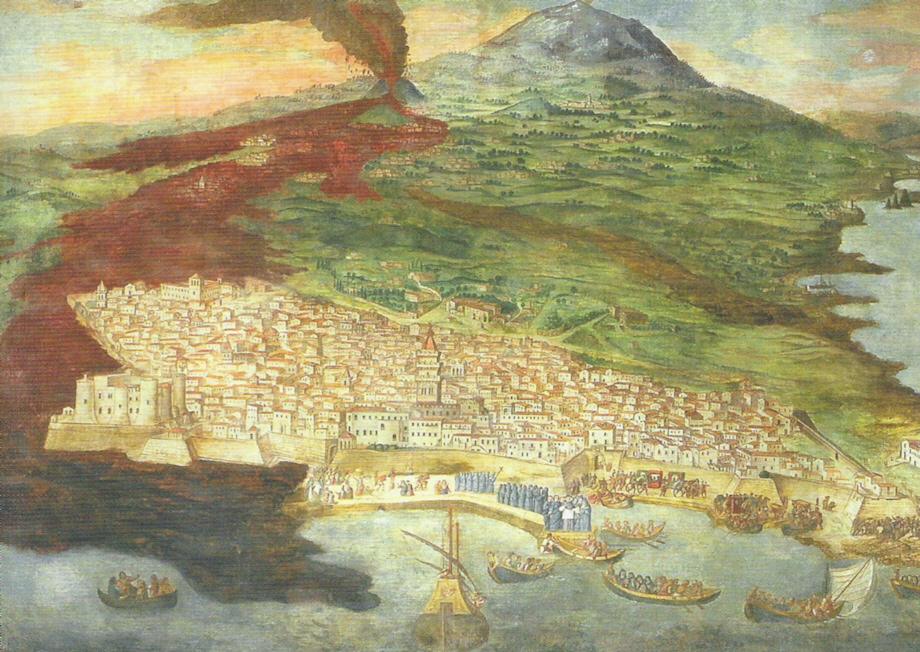
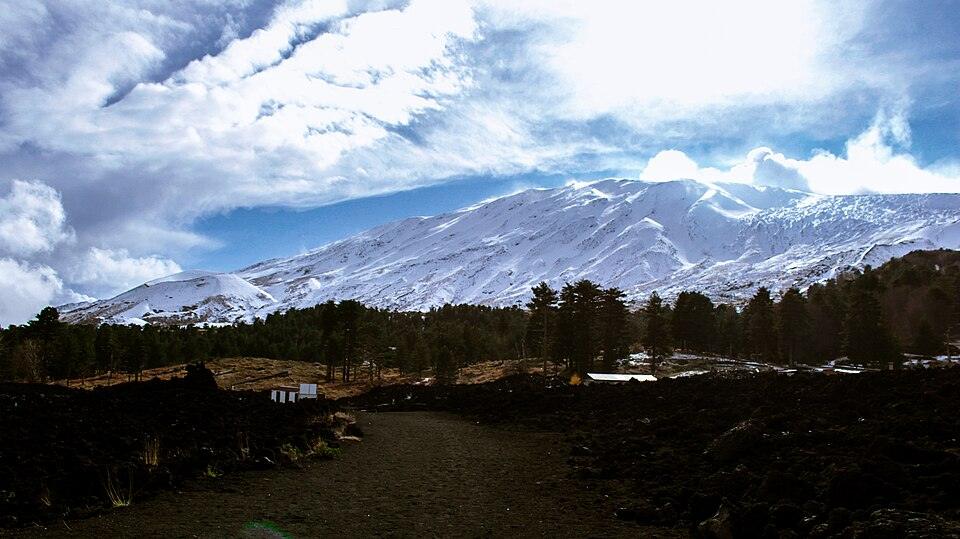
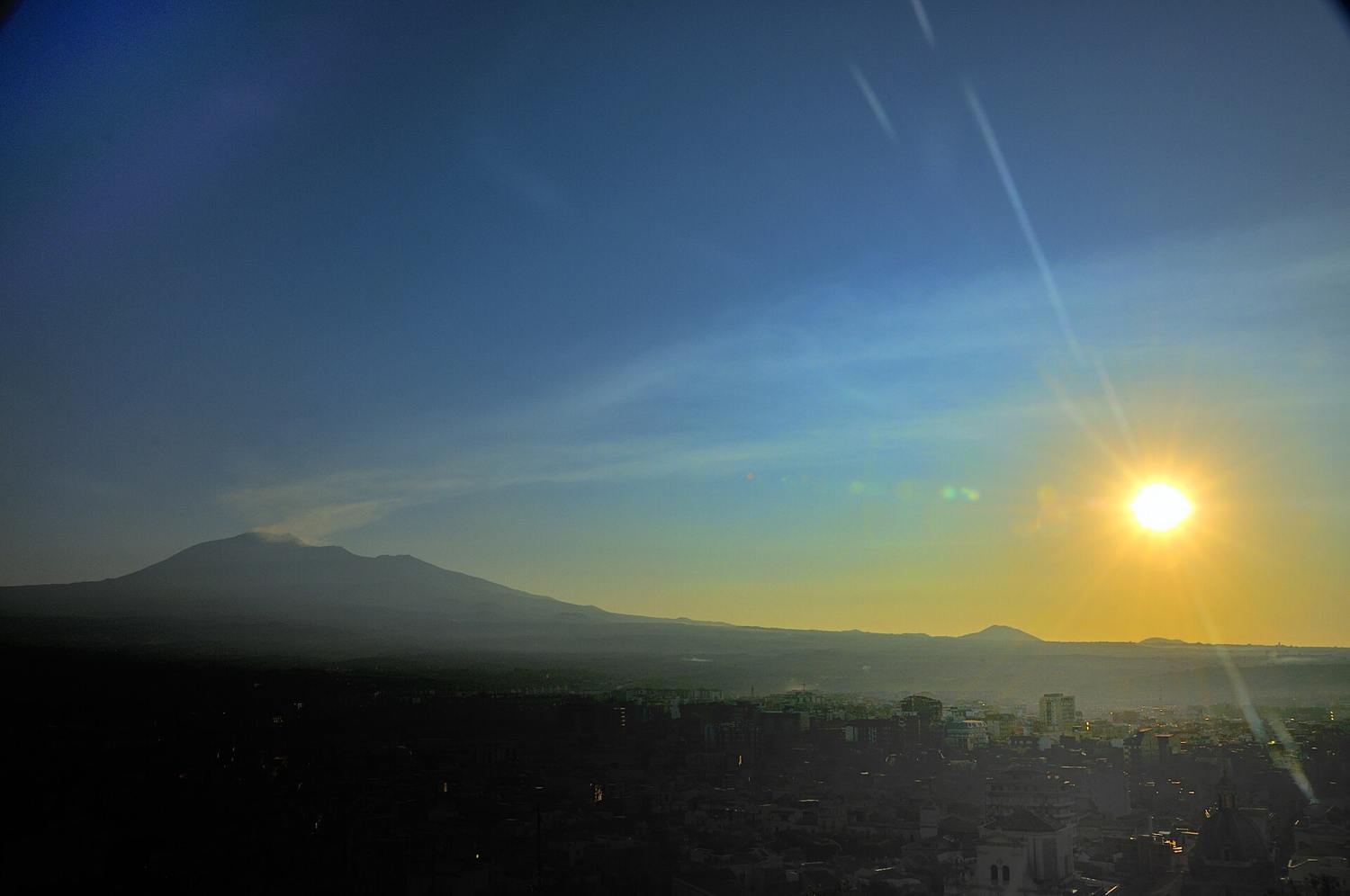
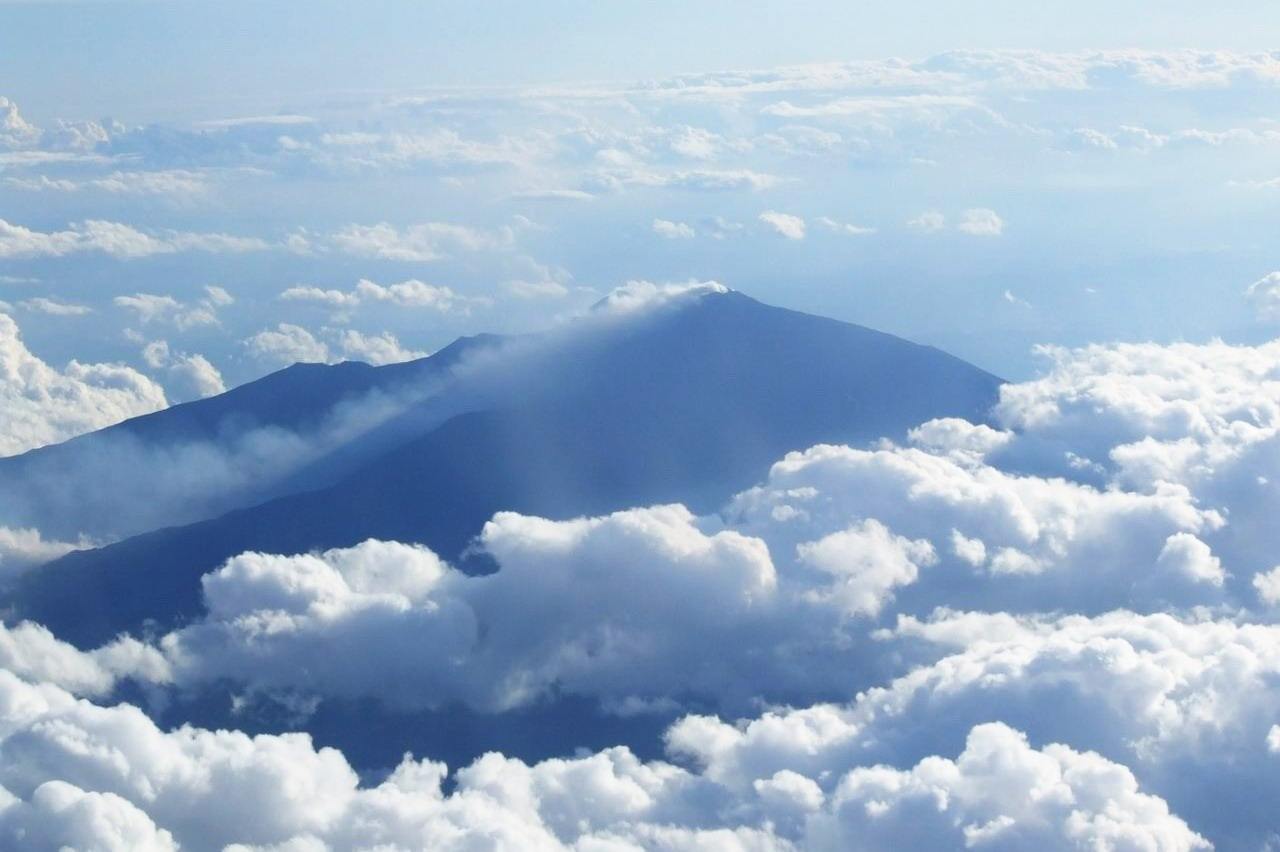
Around 3,350 metres — the height changes with every eruption — and 45 kilometres across: Etna is not a mountain in Sicily, it is a piece of Sicily. It was born half a million years ago underwater, in the gulf that is now the plain of Catania, and has never stopped building and unbuilding itself since. A UNESCO World Heritage Site since 2013, it is one of the most active and most studied volcanoes on the planet, with four summit craters and hundreds of lateral cones. Vineyards, forests and villages grow on its flanks: here the volcano is not a threat, it is a neighbour.
For the Greeks, beneath the mountain lay Typhon, the hundred-headed monster Zeus crushed with the whole island: when he turns over, the earth trembles; when he breathes, the crater smokes. In its depths Hephaestus, the smith god, forged Zeus’s thunderbolts with the help of the Cyclopes. And here the philosopher Empedocles — who had built an observatory on the volcano — is said to have thrown himself into the crater to prove his divine nature: the Mountain, they say, gave back only one bronze sandal. Every age has told the story of Etna; none has stopped watching her.
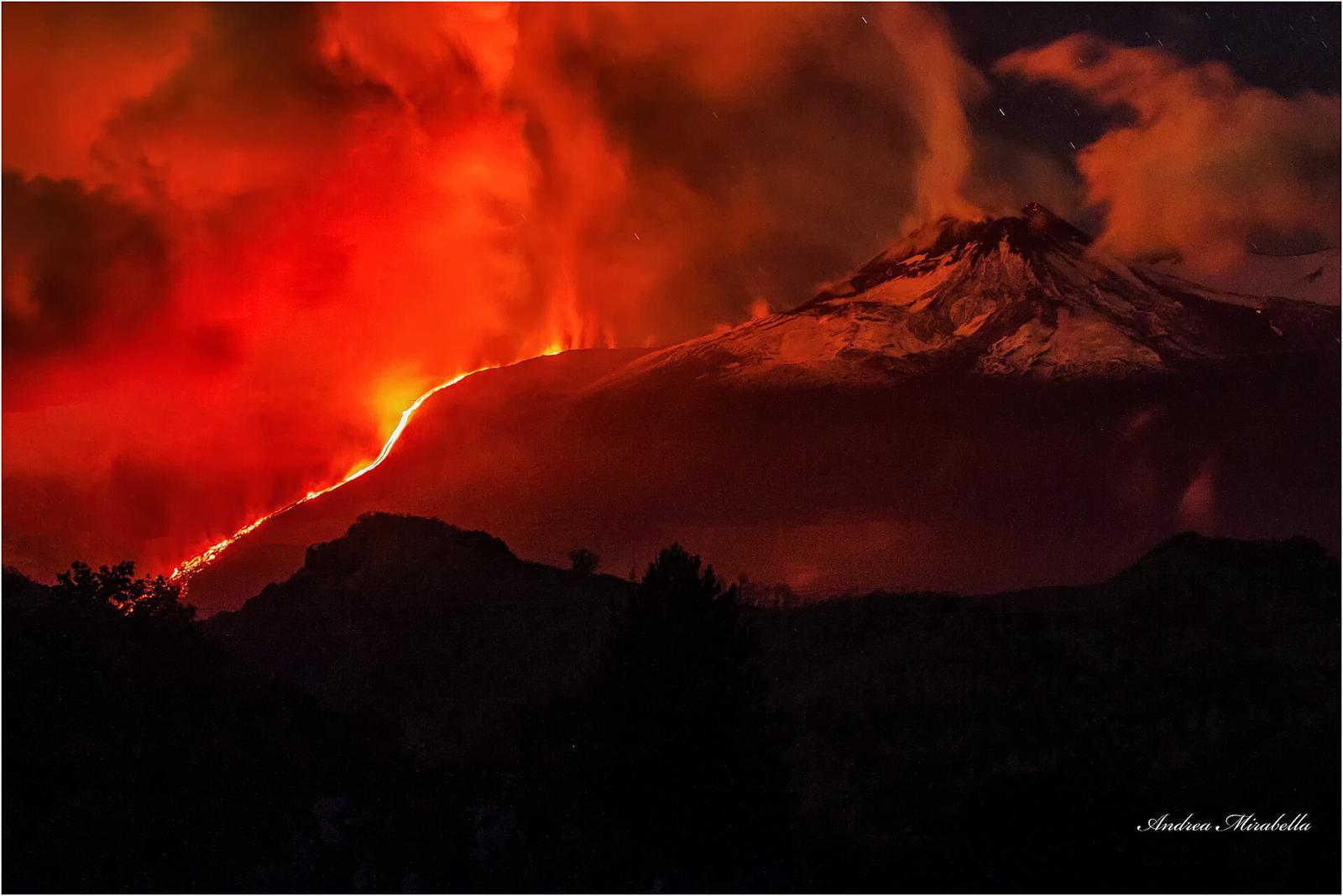
Etna never closes: these webcams show her right now. If the crater lights up tonight, tomorrow the tour will be your story to tell.
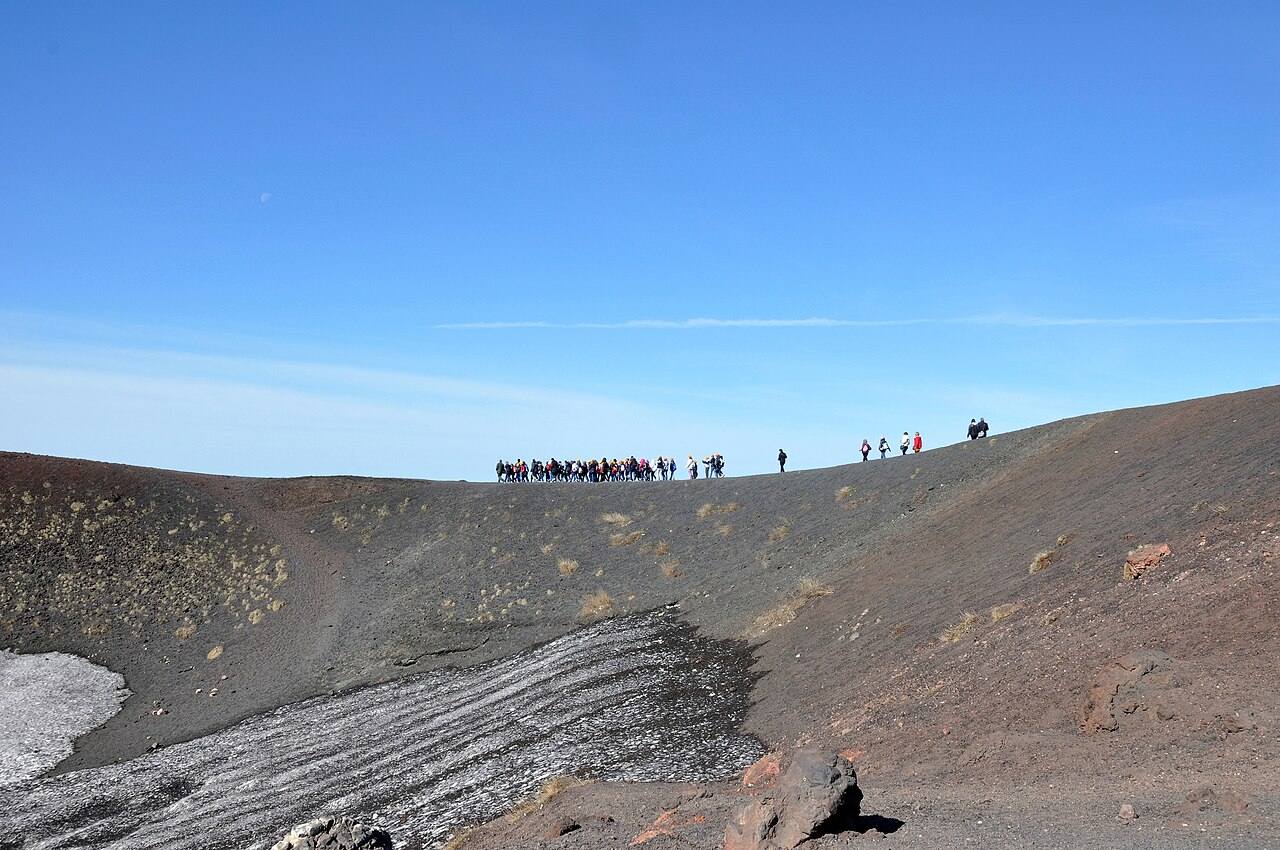
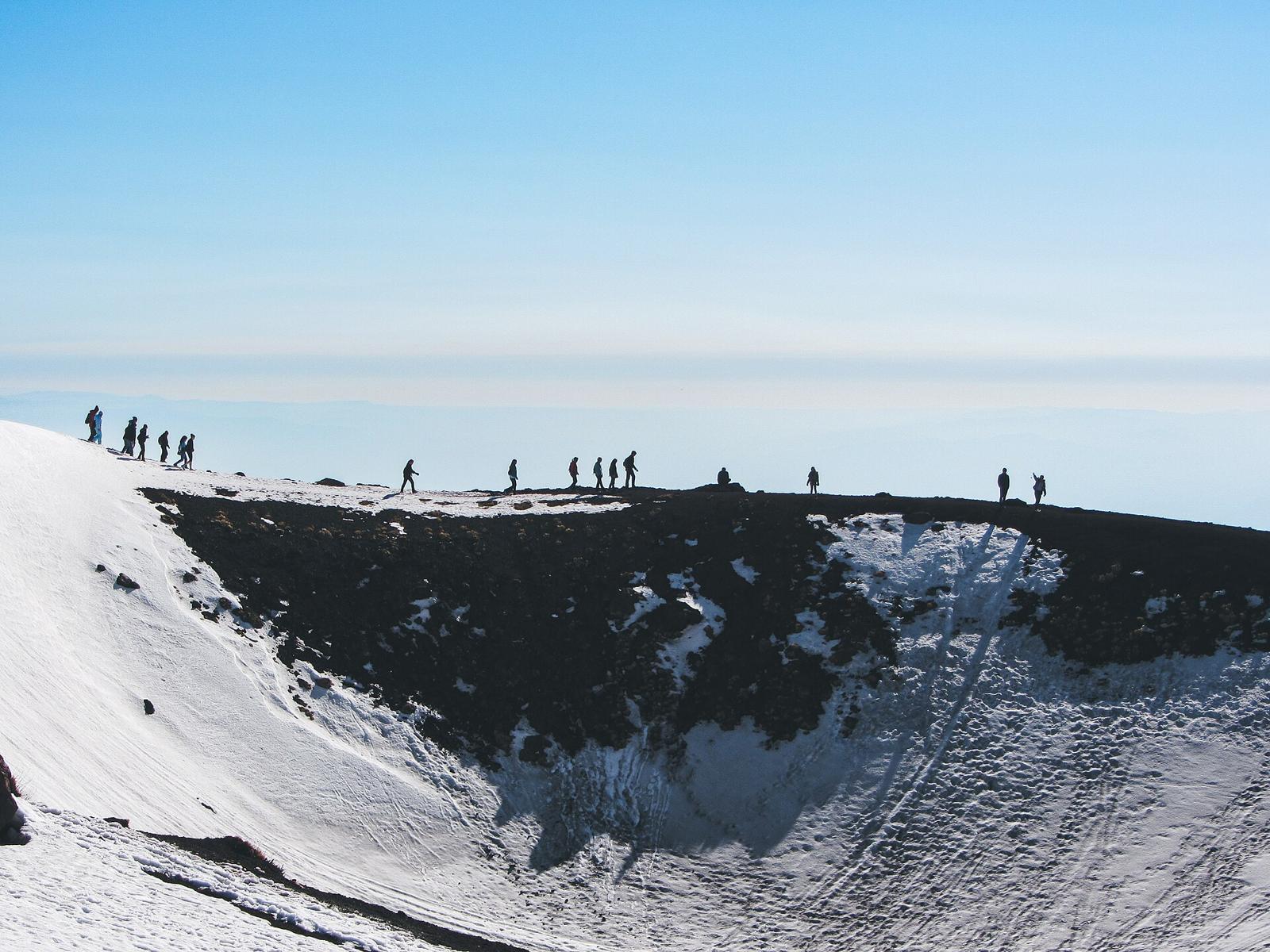
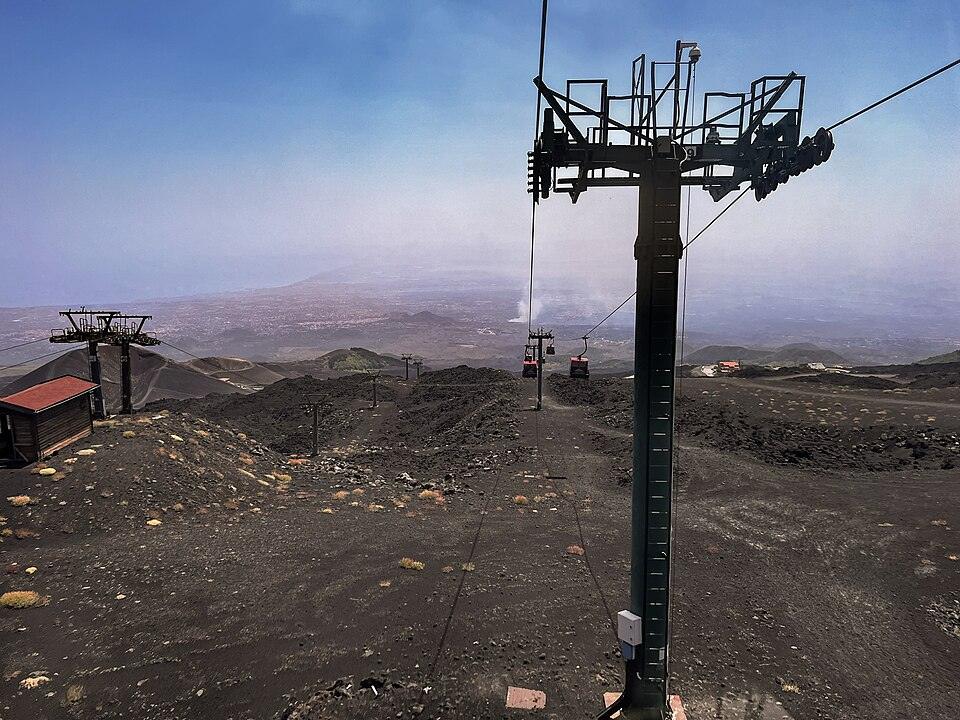
Half a day at the craters, a full day with the Alcantara gorges, or the wine tour: the Mountain can be visited many ways — and your driver knows them all.
Take me up Etna