EtnaRide
Transfer Tour Quote Contact
Discover
🌋 Etna 🏞 Alcantara Gorges 🏝 Aeolian Islands 🌊 Sea and islands 🍷 Wineries ⛪ Tindari
Mount Etna

Mount Etna

Europe’s tallest active volcano: half a million years of eruptions, a myth for every crater, and snow beside fire. Sicilians simply call her «a Muntagna» — the Mountain.

The giant

Around 3,350 metres — the height changes with every eruption — and 45 kilometres across: Etna is not a mountain in Sicily, it is a piece of Sicily. It was born half a million years ago underwater, in the gulf that is now the plain of Catania, and has never stopped building and unbuilding itself since. A UNESCO World Heritage Site since 2013, it is one of the most active and most studied volcanoes on the planet, with four summit craters and hundreds of lateral cones. Vineyards, forests and villages grow on its flanks: here the volcano is not a threat, it is a neighbour.

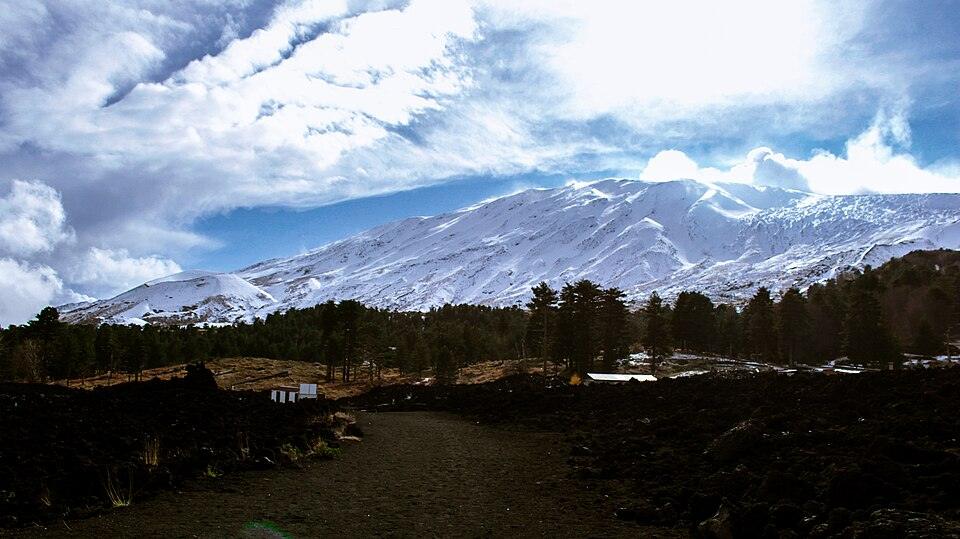
Snow beside fire.

The myth

For the Greeks, beneath the mountain lay Typhon, the hundred-headed monster Zeus crushed with the whole island: when he turns over, the earth trembles; when he breathes, the crater smokes. In its depths Hephaestus, the smith god, forged Zeus’s thunderbolts with the help of the Cyclopes. And here the philosopher Empedocles — who had built an observatory on the volcano — is said to have thrown himself into the crater to prove his divine nature: the Mountain, they say, gave back only one bronze sandal. Every age has told the story of Etna; none has stopped watching her.

The chronicle of fire: the great eruptions

~500,000 years ago
The first submarine eruptions in the pre-Etnean gulf. The pillow lavas of Aci Castello, beneath the Norman castle, are still there to tell the tale.
122 BC
The Plinian eruption that buried Catania in ash. Rome exempted the city from taxes for ten years: history’s first disaster relief.
1669
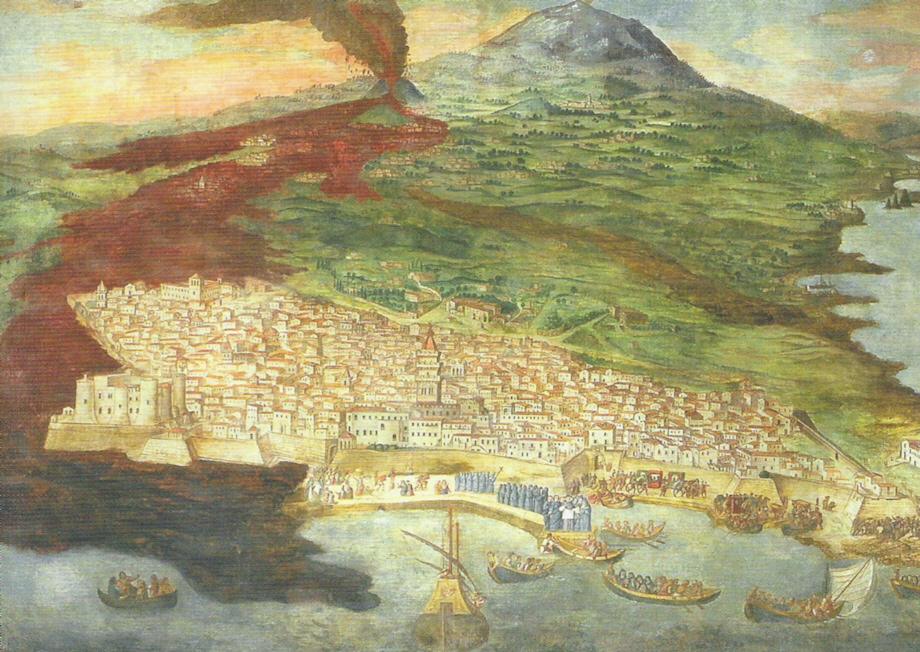
The Great Eruption: 122 days. The fracture at Nicolosi built the Monti Rossi; lava swallowed fourteen villages, rounded the walls of Catania and quenched its front in the sea. The city rebuilt on that lava is the baroque we see today.
1892
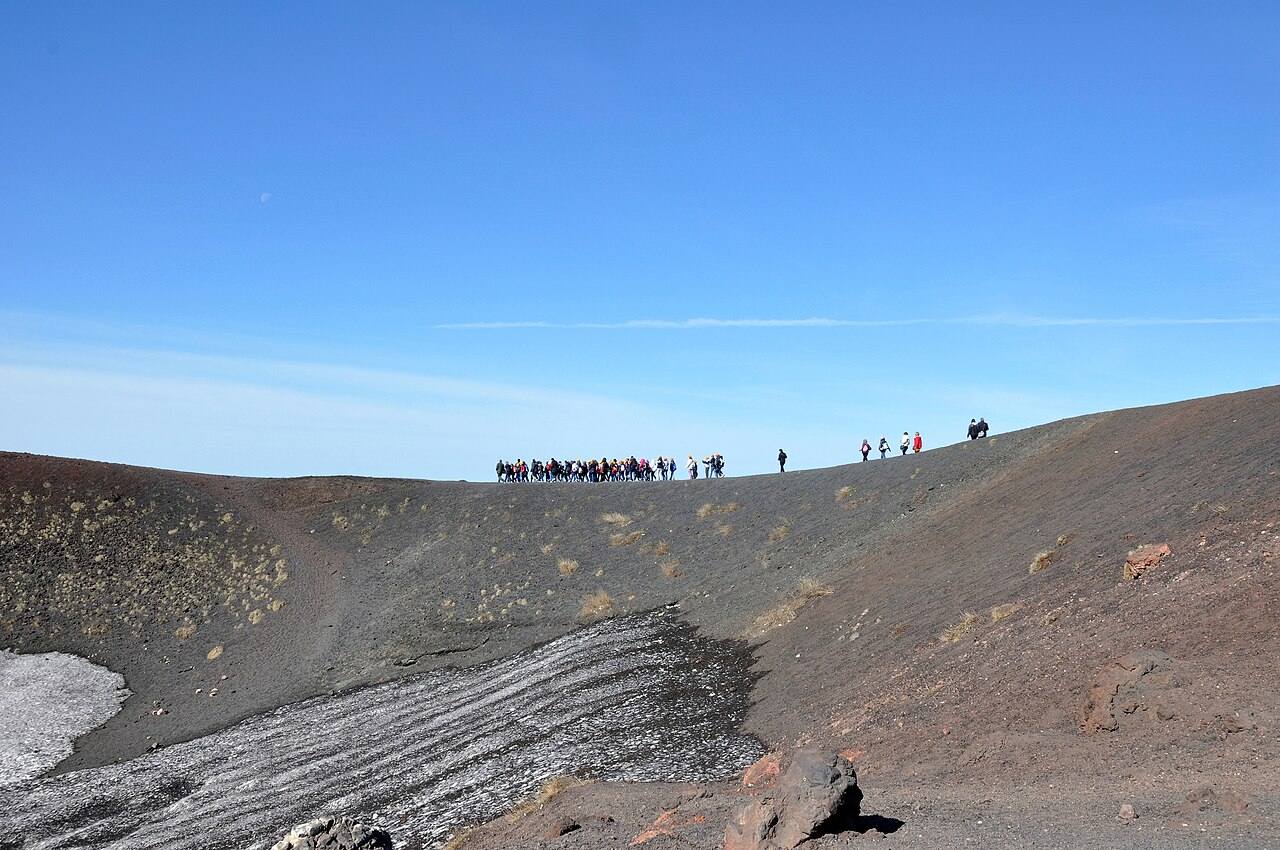
A flank eruption builds the Monti Silvestri: the extinct craters every visitor walks today beside the Rifugio Sapienza.
1928
In two days lava erased Mascali, evacuated house by house. It is the only Etnean town completely destroyed in the twentieth century; it was rebuilt slightly downhill.
1991–1993
The longest of the century: 473 days. To save Zafferana, embankments rose, lava channels were mined and — for the first time anywhere — a river of fire was diverted. The town was spared with the lava front one orchard away.
2002–2003
The «perfect eruption», on two flanks at once. To the north, lava overran Piano Provenzana: the tourist station was reborn, and today you walk on that flow still warm with history.
2021
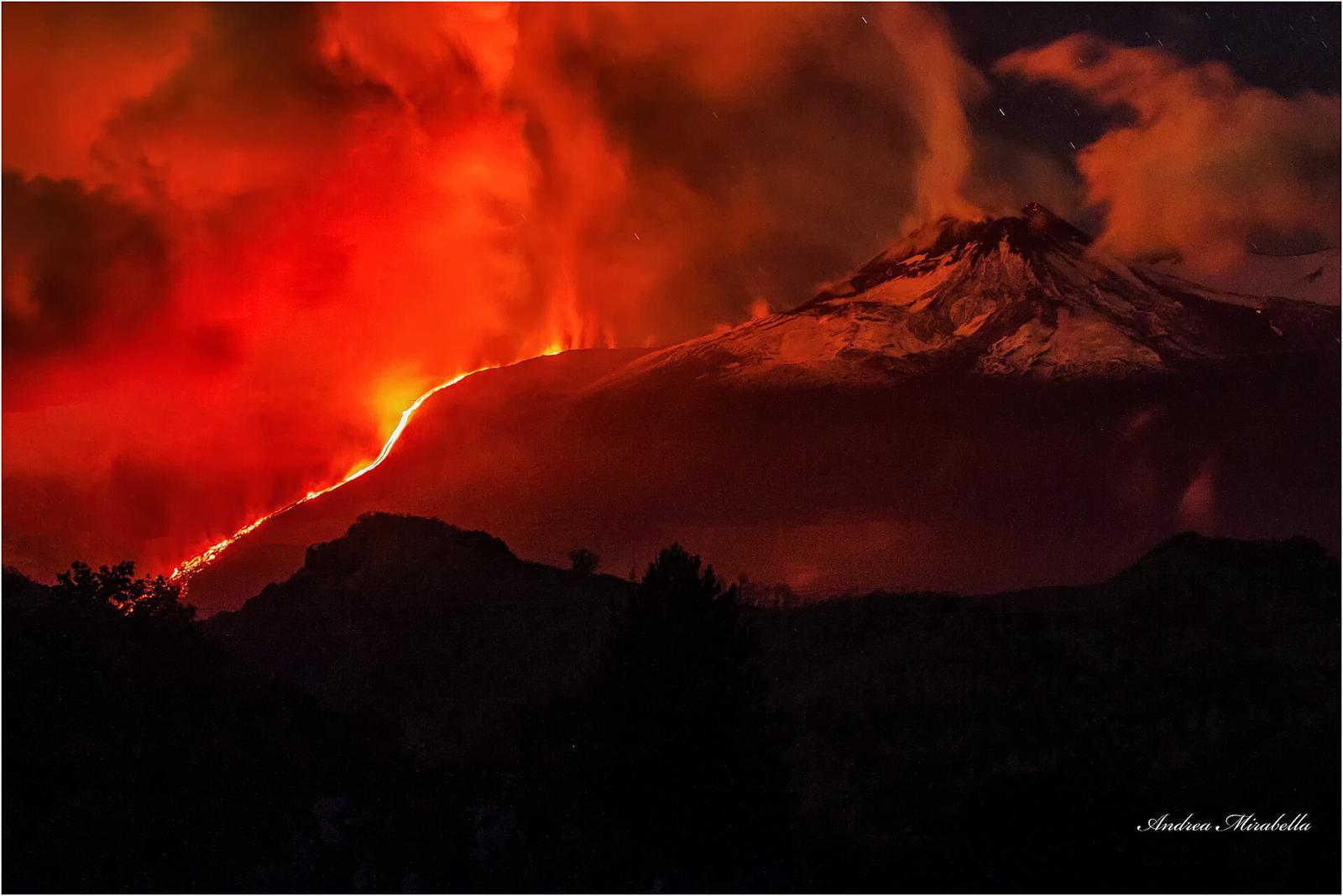
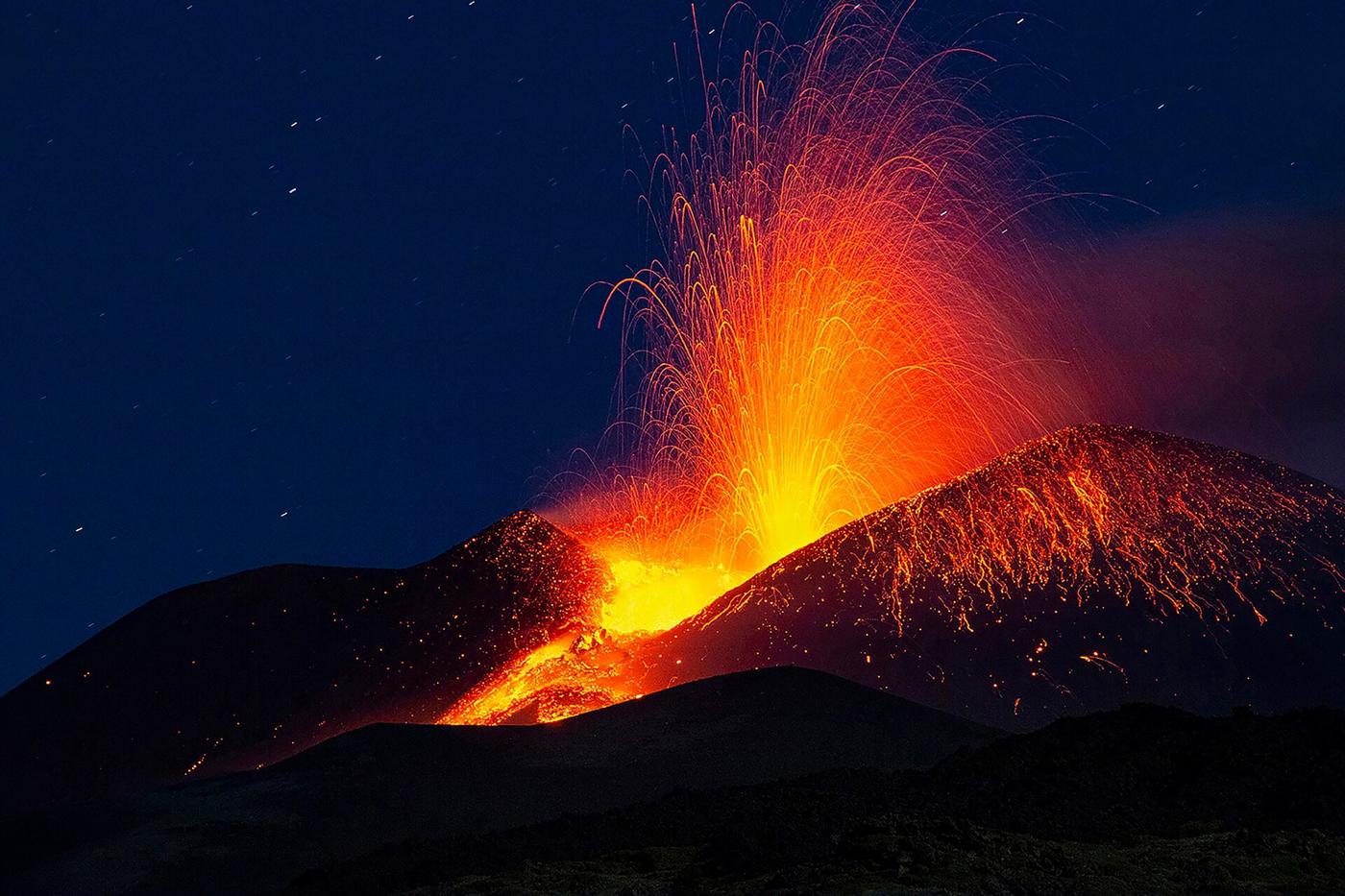
The year of paroxysms: some sixty lava fountains from the South-East Crater in a few months, ash columns kilometres high, shows visible from Taormina to Syracuse. The cone grew so fast it became the volcano’s new summit.
Today
The INGV watches the Mountain 24/7 with seismographs, GPS, thermal cameras and satellites: it is among the most monitored volcanoes in the world, which is why it can be visited safely. The altitudes you can reach change with the activity — and when the crater lights up, the show from the coast is free.

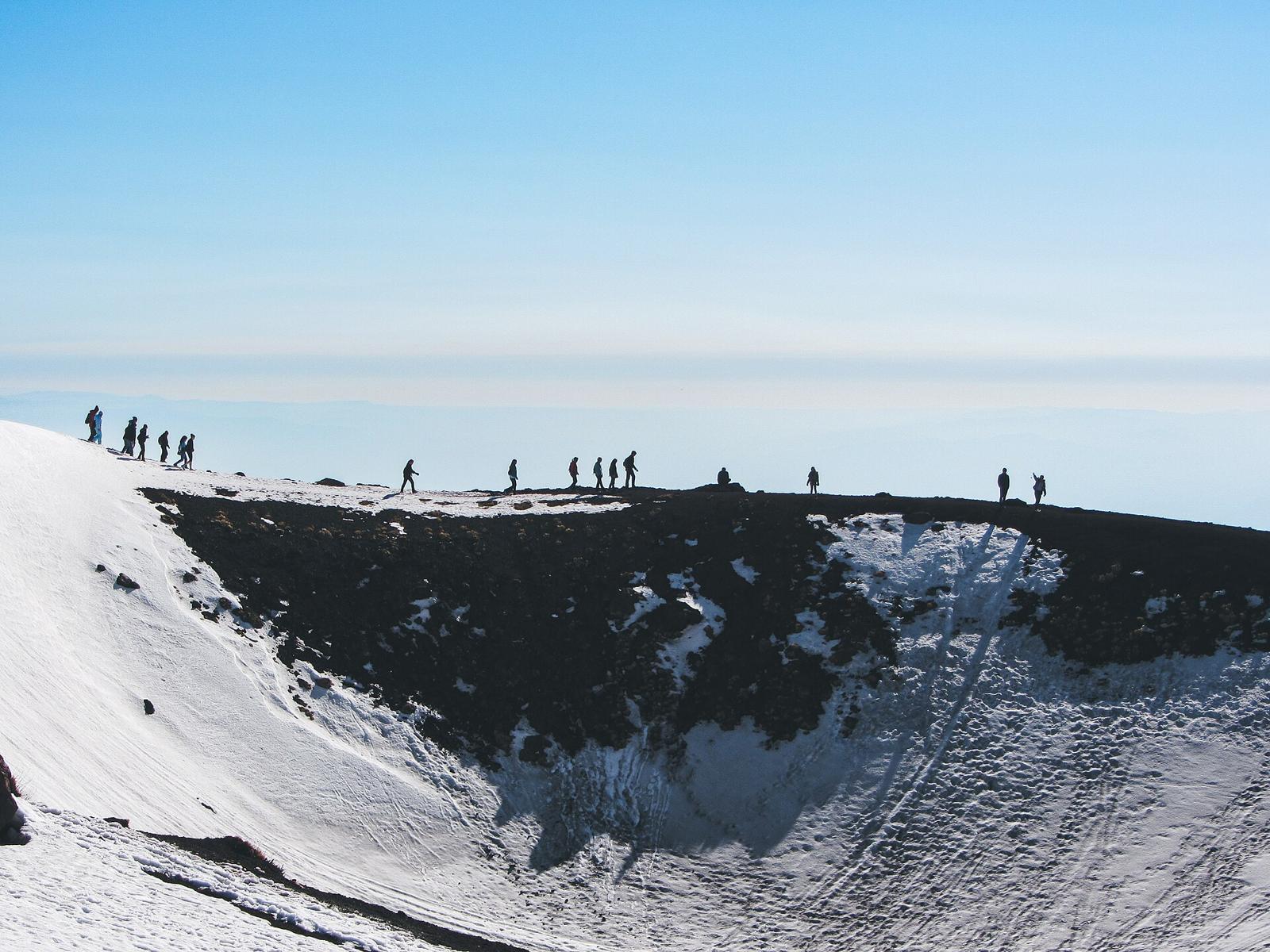
Walking the rim of a crater: you can — and you never forget it.

The two sides

Etna South — the cable car and the Silvestri craters

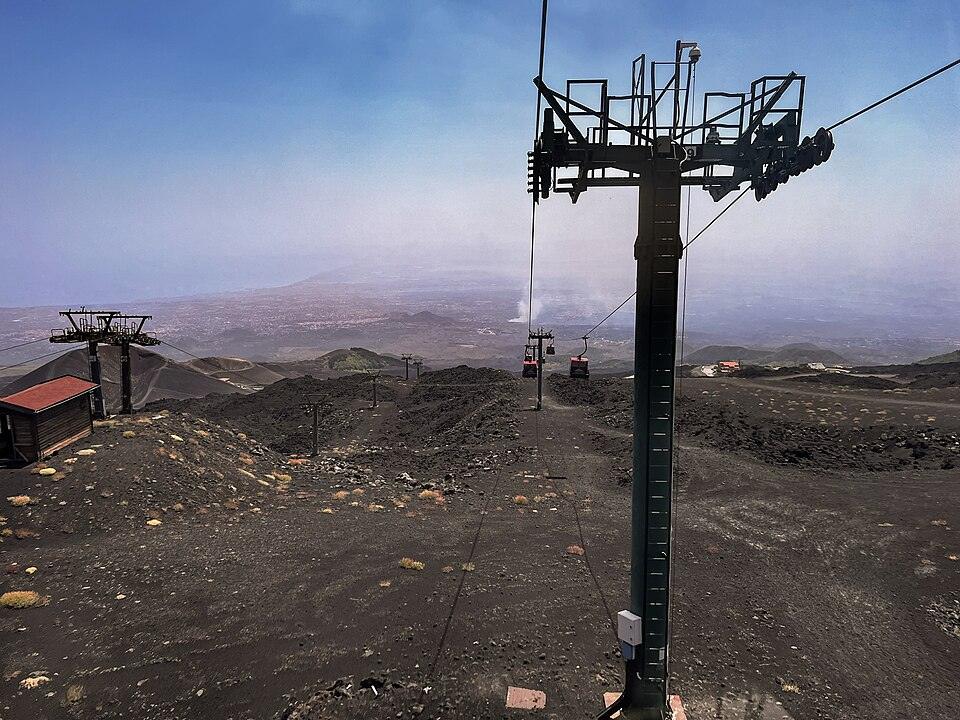
The side for everyone: Rifugio Sapienza at 1,900 m, the very easy Silvestri craters walk (open 8:30–17:00, €5), the Etna Cable Car up to 2,500 m and the 3000 Tour with 4x4 bus and guide to almost 3,000 m. Equipped vehicles, fine for families and seniors.

See the tour →

Etna North — Piano Provenzana, the wild side

Less crowd, more volcano: from Linguaglossa and the Ragabo pinewood you climb to Piano Provenzana (1,800 m), among the 2002 lava flows. The operators’ 4x4s leave at 10:30, 12:00 and 13:30 and reach 2,920 m — easy walk on the rim of the 2002 craters, viewpoint at 3,000 — and at sunset there is the outing you never forget (€69–79, volcanological guide included).

See the tour →

The Mountain live

Etna never closes: these webcams show her right now. If the crater lights up tonight, tomorrow the tour will be your story to tell.

Dawns and horizons

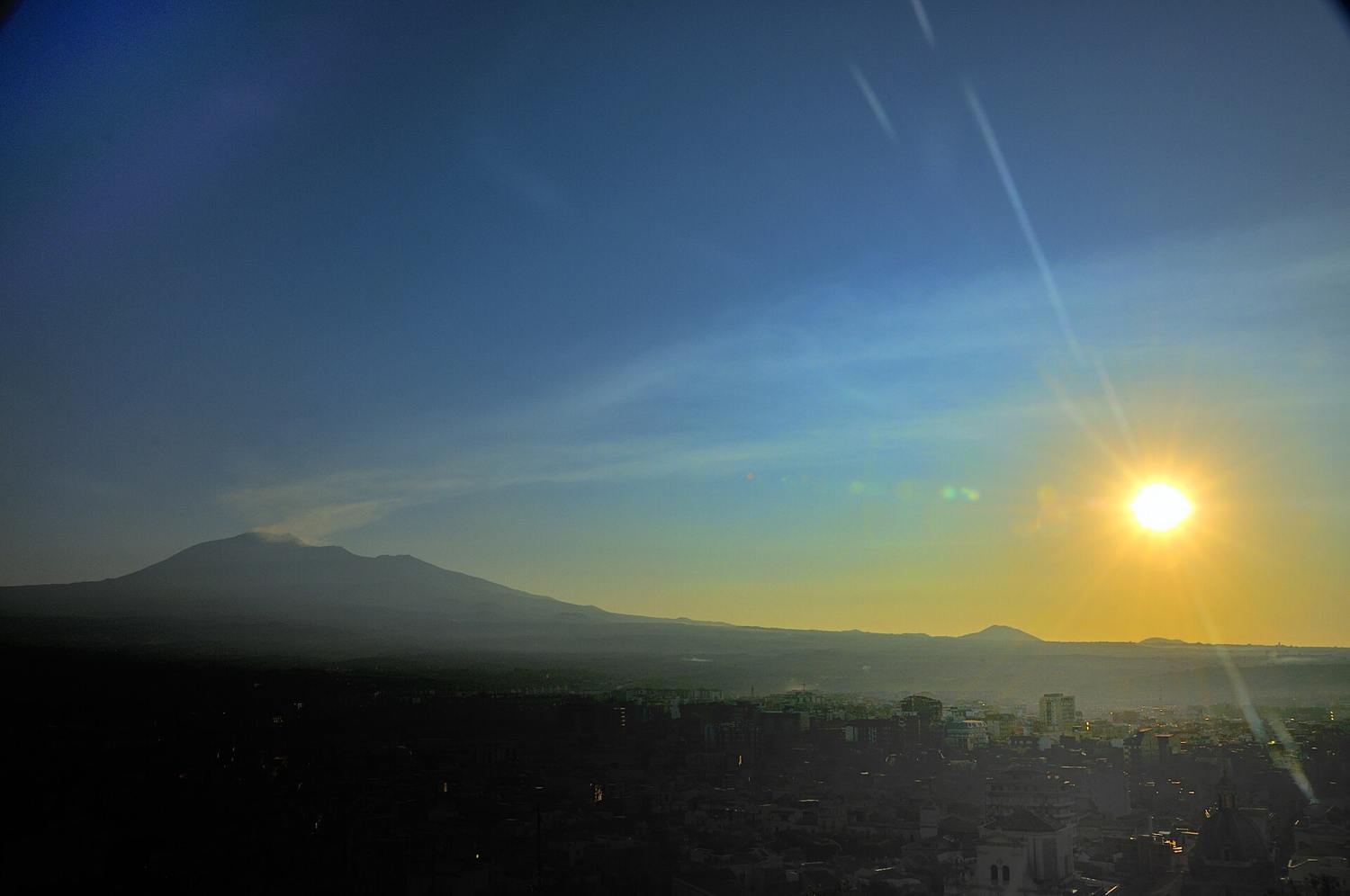
Dawn behind the Mountain: the volcano lights up before the city does.
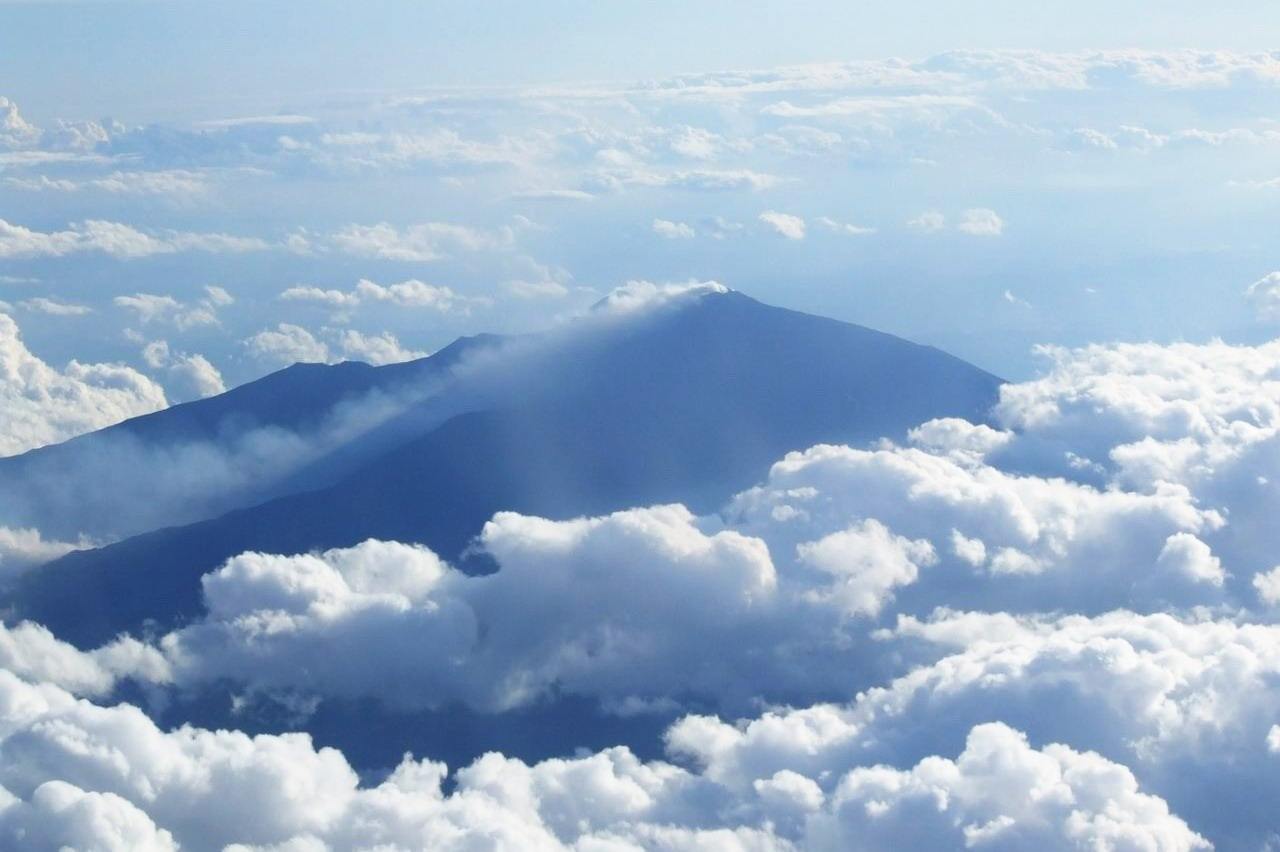
The summit above the clouds: on clear days, from the craters your gaze reaches the sea and the Aeolian Islands.

Half a day at the craters, a full day with the Alcantara gorges, or the wine tour: the Mountain can be visited many ways — and your driver knows them all.

Take me up Etna